Safety & OSHA Compliance Resources
At Susquehanna Crane & Hoist, we combine rigorous safety standards with actionable workplace resources to keep your operators safe, your equipment compliant, and your facility running smoothly.
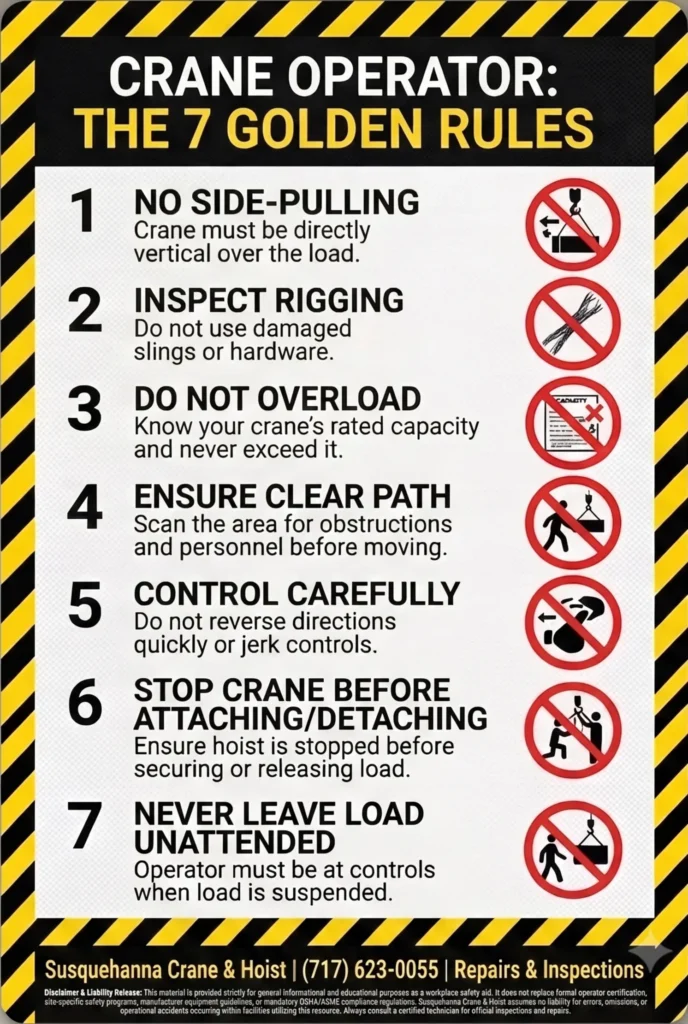
Safe operations require qualified operators, proper rigging calculations, and strict adherence to weight limits. Always verify the center of gravity before lifting a load to prevent swinging or structural failure.
1. Operator Safety & Safe Lifting Practices
2. Daily vs. Monthly Crane Inspections
OSHA requires a pre-shift daily visual inspection of hooks, wire ropes, and control pendants. Monthly inspections dive deeper into wear items, brakes, and limit switches, and must be documented with signed records.
3. Routine Maintenance & Wire Rope Longevity
Wire rope lifespans can be significantly extended through proper lubrication, preventing reverse bends, and ensuring correct drum winding. Routine fleet maintenance should check for birdcaging, kinking, and broken wires.
4. Equipment Lockout & Warning Tags
If any deficiency is found during an inspection—such as a cracked hook, frayed wire rope, or malfunctioning brake—the crane must be locked out immediately. Operations cannot resume until repairs are completed by a certified technician.
5. Wireless Radio Remote Safety & Best Practices
Upgrading from a corded pendant “leash” to a wireless radio remote is the single best way to get operators away from swinging, heavy loads. True freedom allows for a perfect vantage point, but wireless control introduces a new risk: lost or crushed remotes that halt production.
6. VFD Upgrades: Eliminating Load Swing & Shock Loading
Traditional contactors create a violent “clunk and jerk” motion that forces loads to swing like a wrecking ball and cracks runway steel over time. Variable Frequency Drives (VFDs) act as an electronic shock absorber, smoothly ramping motor speeds up and down for millimeter precision and a 10x extension in brake life.
What are the Safety Guide Lines
Stay Safe
Disclaimer & Liability Statement: The safety resources, checklists, guidelines, and downloadable materials provided on this website are for informational, educational, and general reference purposes only. While Susquehanna Crane & Hoist strives to provide accurate information reflecting industry standards and OSHA regulations, these materials do not constitute formal legal or professional engineering advice.
Use of these resources does not substitute for comprehensive operator training, site-specific safety protocols, or mandatory regular inspections by certified technicians. Susquehanna Crane & Hoist assumes no liability or responsibility for any accidents, injuries, fatalities, equipment downtime, property damage, or regulatory compliance violations resulting from the utilization, interpretation, or misuse of these materials. Always consult with your facility’s safety director and a certified crane professional before operating or servicing heavy machinery.